The Traveler’s ROI: Assessing Comfort, Timing, and Value Across the Cabins
I. The "One Extra Night" Philosophy: Investing in Your Journey
For many, travel planning begins and ends with finding the cheapest flight. But at One Extra Night, we believe that approach often misses the point entirely. While a flight ticket presents a clear "price," true "value" is a far more nuanced metric, especially for the discerning traveller.
Imagine this: you land after a long flight, worn out, needing a full day to recover before you can truly enjoy your destination. What was the real cost of that cheap flight? You effectively paid for an extra day of travel, yet lost an entire day of your precious holiday.
Our philosophy is simple: how much is the first day of your trip worth to you? If you arrive completely exhausted, you’ve inadvertently "lost" a day. If you arrive refreshed, invigorated and ready to explore, you’ve essentially "gained" one. This guide will help you understand when to invest in your flight experience to maximise your entire trip's value.
Here's a quick summary of how each cabin class typically impacts your Arrival Readiness:
| Cabin Class | Arrival Readiness | Typical Experience |
|---|---|---|
| Economy | Low – Moderate | Exhaustion likely; recovery day often needed. |
| Premium Economy | Moderate – High | Manageable fatigue; start exploring sooner. |
| Business Class | Very High | Ready to go; minimal jet lag; refreshed. |
II. Economy: The Baseline of Utility for the Budget-Conscious
Economy class is the workhorse of air travel, designed to transport the maximum number of people from A to B at the lowest possible cost. It’s a practical choice, and for many journeys, it’s perfectly adequate.
Comfort: The "Seat Pitch" vs. "Human Endurance" Equation
In Economy, comfort is relative. With seat pitches typically ranging from 29-33 inches, space is at a premium. The upright position, limited recline and proximity to other passengers mean that truly relaxing, let alone sleeping soundly, can be a challenge. It's about getting through the journey (or watching as many films as possible!), not enjoying it.
Timing: When Economy Makes Sense
Economy shines on shorter flights (under 5 hours) or daytime journeys where sleep isn't a priority. Think a quick hop from London to Edinburgh, or a mid-afternoon flight to a nearby European city. For these trips, the physical toll is manageable and you can generally arrive and carry on with your day without significant recovery time.
The Value Play: Strategic Savings
When should you choose Economy? When the money saved can be strategically re-invested to enhance your trip in other, more impactful ways. Perhaps that £300 saving on a short-haul flight allows you to afford an extra night in a luxurious hotel, or indulge in a once-in-a-lifetime experience at your destination. This is where you save your budget to spend it on enhancing the duration or quality of your time on the ground.

Pay less on your flight to spend more at your destination?
III. Premium Economy: The "Middle Ground" Paradox – A True Upgrade?
Often viewed as merely "Economy with a bit more legroom," Premium Economy in 2026 is far more than that. It represents a significant step up in comfort and often delivers exceptional value for money, especially for specific types of journeys.
The Reality: More Than Just Space
Modern Premium Economy cabins often boast:
Wider Seats: Typically 18-20 inches, compared to 17-18 inches in Economy.
Greater Recline: Around 6-8 inches of recline, sometimes with a footrest, allowing for genuine relaxation.
Better Service: Enhanced meal options, dedicated cabin crew and priority boarding.
Dedicated Cabin: Often a smaller, quieter section of the plane, offering a more relaxing environment.
Value Focus: The Transatlantic Sweet Spot
Premium Economy is the ideal sweet spot for many transatlantic or medium-long haul daytime flights (e.g., London to New York). You're not paying for a lie-flat bed you might not need during daylight hours, but you're avoiding the "crush" of the main Economy cabin. The increased personal space, superior comfort and improved service mean you arrive feeling significantly more refreshed and ready to begin your trip, without the substantial leap in cost to Business Class. This is where you genuinely upgrade your travel experience without breaking the bank.
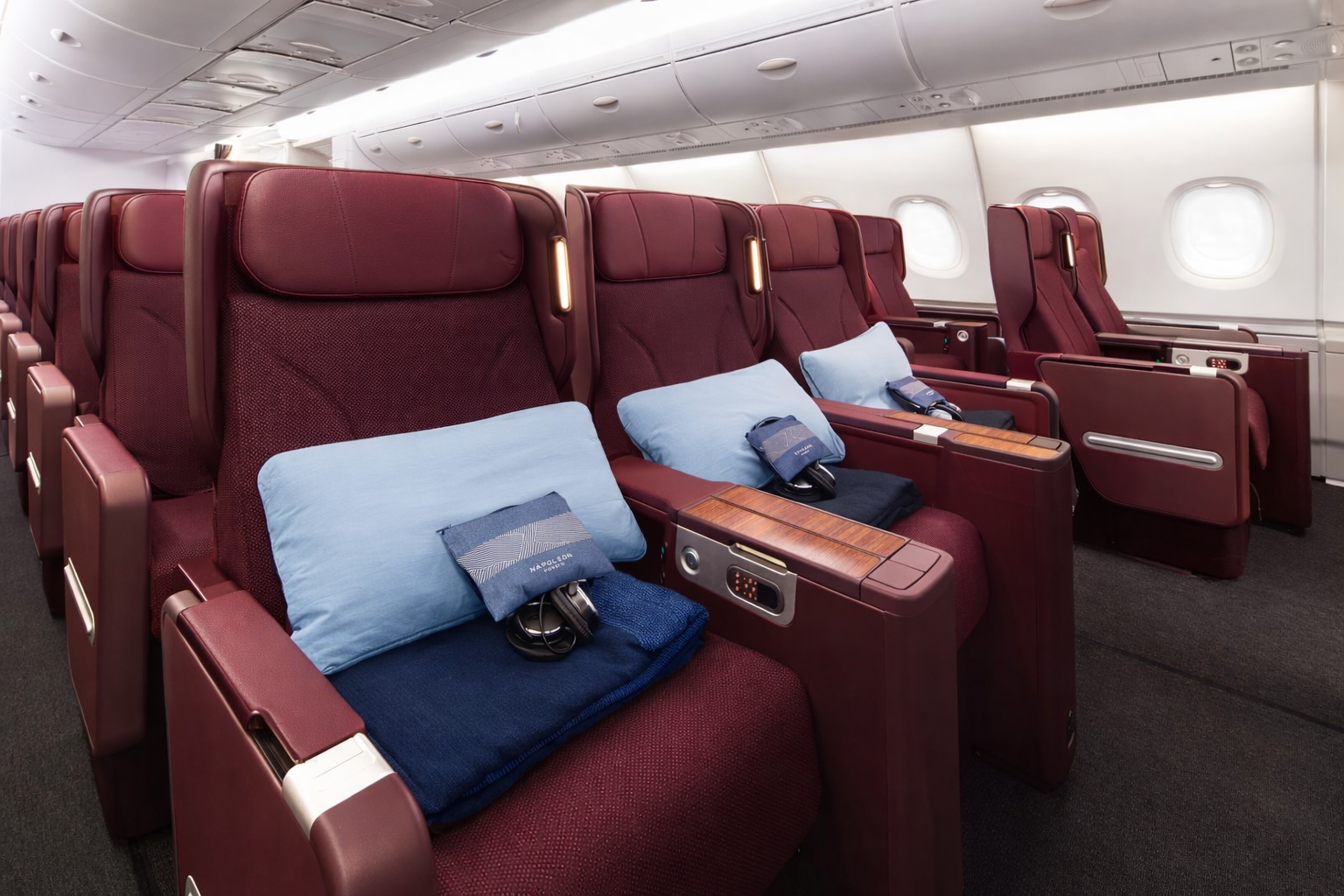
Premium Economy hits the sweet spot
IV. Business Class: The Investment in "Time Recovery" and Peak Performance
Business Class is not merely about luxury; it's an investment in your arrival readiness, productivity and the overall quality of your journey. For certain flights and travel goals, it is genuinely the most economical choice when you factor in time, comfort and the ability to perform or enjoy from the moment you land.
Comfort: The Science of the Lie-Flat Seat
The defining feature of Business Class is the ability to lie completely flat. This isn't just about relaxation; it's about enabling REM sleep at cruising altitude. Arriving after a full night's sleep in a proper bed allows your body clock to adjust more smoothly, drastically reducing jet lag and ensuring you hit the ground running, ready to work or explore immediately. It’s the difference between needing a day to recover and having that day back.`
The Hidden Value: Beyond the Seat
The true value of Business Class extends far beyond the spacious seat:
Lounge Access: Turning several hours of "waiting" in a noisy terminal into productive work time, a quiet space to relax, or an opportunity to shower and refresh before boarding. If you have a 3-hour layover, a lounge transforms that into a valuable extension of your travel experience.
Fast-Track Security & Boarding: Saving valuable time and reducing stress by bypassing lengthy queues at check-in, security and boarding gates. On a busy day, this can easily reclaim 60-90 minutes of your journey.
Arrival Readiness: Consider the cost of a missed meeting, a ruined first day of a holiday, or an additional hotel night purely for recovery. Business Class directly mitigates these risks.
Timing: The "Red-Eye" Rule
For overnight flights, particularly those landing in the morning (e.g., from London to Asia, or a transatlantic red-eye), Business Class becomes a non-negotiable investment for the savvy traveller. The ability to sleep through the night and wake up feeling relatively normal is priceless. It allows you to maintain your routine and truly maximise your time at your destination without the debilitating effects of sleep deprivation.
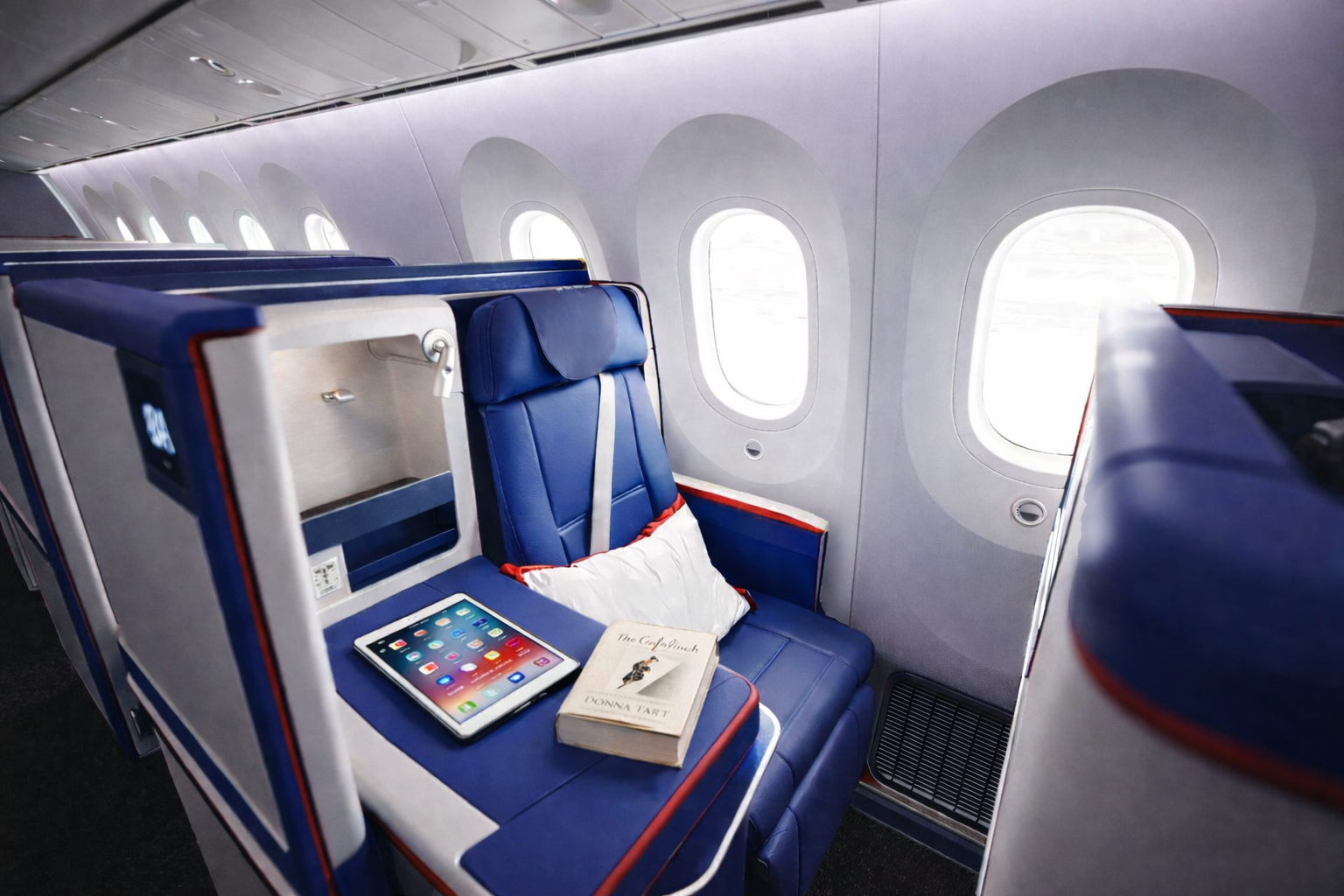
An airline seat that becomes a bed in business class
V. The Value Decision Matrix: When to Upgrade
To determine the true value of a seat, stop looking at the fare and start looking at your Arrival Readiness. Use this four-point matrix to decide if the jump to Premium Economy or Business Class is a smart investment for your specific trip.
1. The "Arrival Day" Cost
Ask yourself: What is the daily cost of my trip? If you have spent £4,000 on a 7-day holiday, your "awake time" is worth roughly £570 per day.
The Economy Risk: If a 10-hour flight in a cramped seat results in a "lost" first day due to exhaustion, you’ve effectively wasted £570.
The Upgrade Value: If a £600 upgrade to Business Class ensures you hit the ground running, the net cost of that comfort is only £30. It's an investment that pays for itself.
2. The Flight Duration "Cliff"
Comfort requirements don't scale linearly; they scale exponentially.
Under 5 Hours: Economy is usually sufficient. The "Value" of an upgrade is low because the physical toll is manageable.
5 to 9 Hours: This is the Premium Economy Sweet Spot. You need the extra recline and elbow room to avoid "cabin fever," but a full bed may not be necessary.
9+ Hours: This is Business Class Territory. At this length, the ability to lie flat and achieve REM sleep is the difference between a successful trip and a physical recovery period.
3. The "Red-Eye" Rule
Timing is the ultimate decider of value.
Daytime Flights: If you are flying from London to New York during the day, you don't necessarily need a bed. Premium Economy offers the perfect balance of comfort for reading or working without the full Business Class price tag.
Overnight Flights: If the goal is to sleep, the value of a Business Class pod skyrockets. Being able to bypass the "middle seat shuffle" and the upright-sleep ache is a direct investment in your health for the following 48 hours.
4. The "Peripheral" Time Savings
Value isn't just in the seat; it’s in the hours reclaimed at the airport.
Priority Access: Business Class often saves 60–90 minutes through dedicated check-in and security lanes.
Lounge Utility: If you have a 4-hour layover, a lounge provides a quiet office, a shower, and a meal. If you’d otherwise spend £100 on airport food and a "Day Pass," that value should be subtracted from your ticket upgrade cost.
The One Extra Night Rule: If the price difference between Economy and Business is less than the cost of "losing" one full day of your itinerary, the upgrade isn't a luxury—it's a logistical optimisation.
VI. Conclusion: Choosing Your Experience, Not Just Your Price
In 2026, the savvy traveller understands that a flight is more than just transportation. It's an integral part of the overall journey. Don't look at the ticket price in a vacuum; look at the Total Trip Impact.
By carefully considering your comfort needs, flight duration, and the precious value of your time, you can make informed decisions that transform your travel from merely enduring to truly enjoying. Investing in the right cabin class can genuinely give you that "one extra night" of vitality, productivity or pure holiday bliss at your destination.
Ready to plan your next holiday? Get in touch with Victoria or Guy at One Extra Night Travel for more value-first travel insights and exclusive tips for maximising your time away.
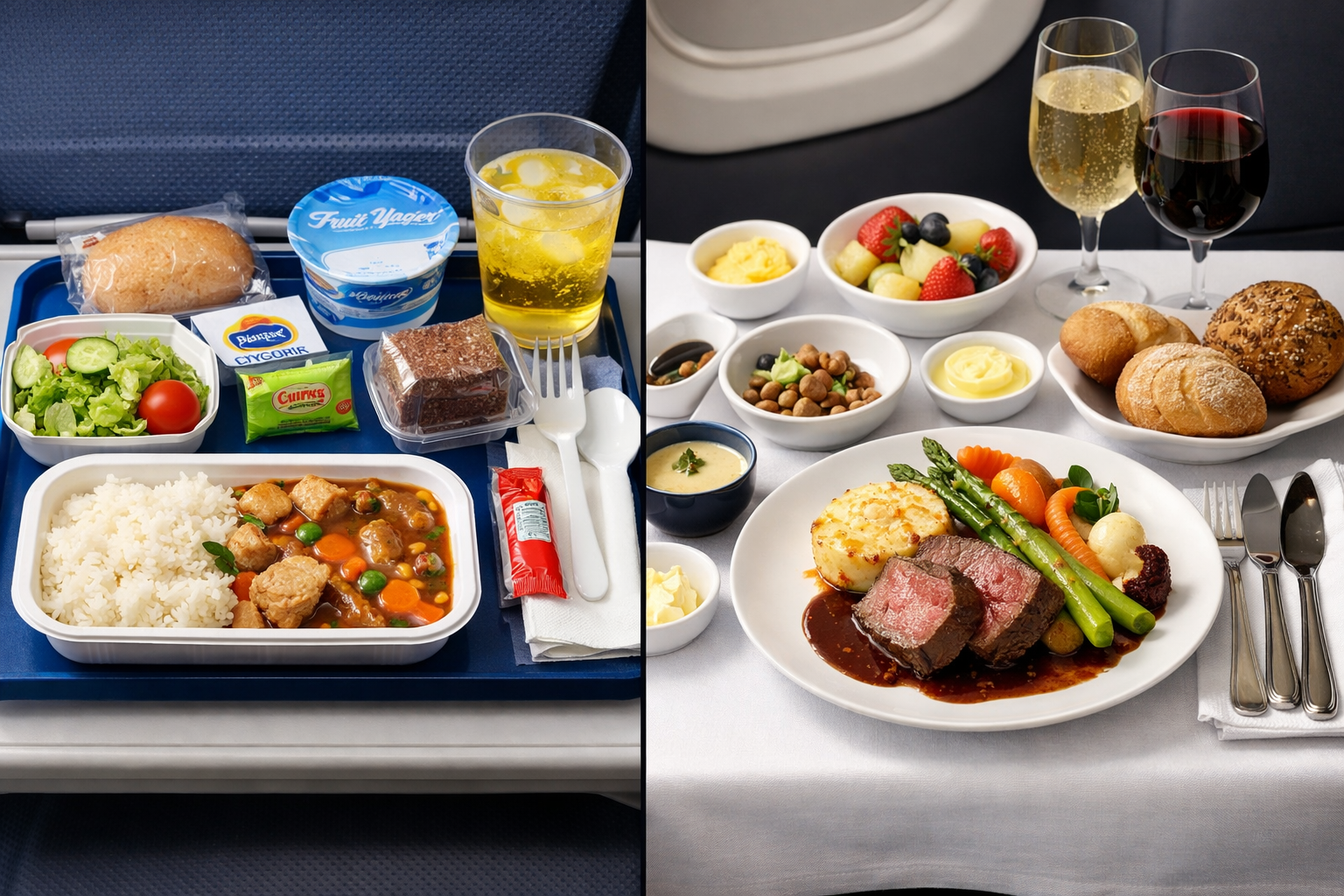
Economy meal vs Business Class meal