Rome in 3 Days: A Complete Itinerary, Hotel & Restaurant Guide
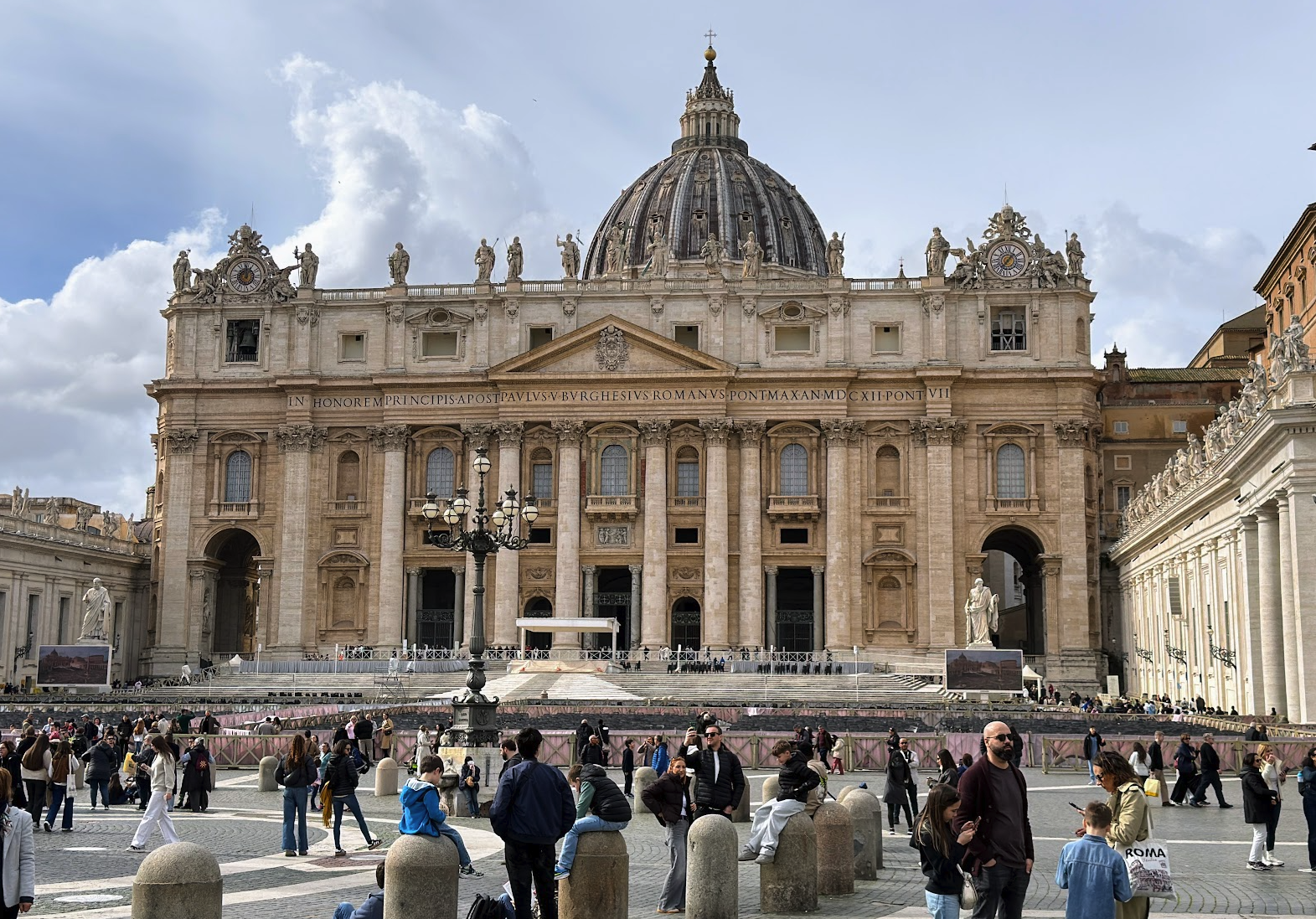
St Peter's Basilica in Vatican City, seen from St Peter's Square.
Rome is one of those cities that rewards planning. It can feel overwhelming, crowded and chaotic — or seamless, romantic and unforgettable. We recently returned from a three‑day Rome city break to celebrate a birthday and it reminded us why this remains one of the most compelling short holidays or city breaks from the UK.
This guide shares our 3‑day Rome itinerary, where we dined, where we stayed and the practical travel decisions that made the trip work. If you’re considering a Rome holiday, this is how to do it properly. Oh and in case you’re, wondering we had two stunning days of February sunshine without the summer crowds!
Getting There: Flying from Newcastle to Rome
We flew with Jet2 from Newcastle International Airport (NCL) to Rome Fiumicino Airport (FCO).
Newcastle remains one of the most hassle‑free UK departure airports. Security is efficient, distances are short, and the overall experience feels calm — an ideal start to a short break.
The flight itself was on time both ways, with friendly service on board. Jet2 also offered very good inflight duty‑free discounts, which is worth noting if you typically purchase at the airport.
If available, we strongly recommend booking exit‑row seats. The additional legroom makes a noticeable difference, particularly on the return flight after some serious walking around Rome! Being able to stretch out properly makes such a difference when you are heading back home after a lovely trip away.
The flight times also work extremely well for a short Rome city break. We arrived in time for a relaxed late dinner (though not particularly late by Roman standards), dropped our bags and headed straight out for a delicious pizza and a Peroni at Casa Mia. It was the perfect, unfussy first night — exactly what you want after a smooth arrival.
Why Rome Works Perfectly for a 3–4 Night City Break
For UK travellers, Rome is ideal for a 3–4 night city break. Flying out on a Monday and returning on a Friday, as we did, gives you the rhythm of a long stay without peak weekend crowds. Direct flights from regional airports mean you can leave in the morning and be checking into your hotel by early afternoon. The historic centre is compact and walkable, allowing you to experience major landmarks without relying heavily on taxis or public transport (although if you do want to give your feet a break after a long day walking around the city, Uber partners with the local taxis in Rome so you can call for a lift back to your hotel anytime, anywhere).
You can stand inside ancient ruins in the morning, enjoy a long Roman lunch, and wander through baroque piazzas by evening. It suits couples particularly well — cultural, atmospheric and built around exceptional food — without needing a full week away.
Day 1: Ancient Rome & Monti
We began with Ancient Rome — the foundation of any well‑planned Rome itinerary.
Our morning started with a timed-entry visit to the Colosseum. You must book this in advance to avoid disappointment and to avoid the ticket touts operating on the surrounding streets. Purchasing official Colosseum tickets online in advance — often referred to as skip-the-line Colosseum tickets — removes uncertainty and allows you to enter smoothly at your allocated time. Pro tip - try to arrive by metro which will allow you to see the recently renovated ‘Colosseo’ station which is really worth a look.
From the Colosseum, we continued directly into the Roman Forum and up to Palatine Hill. This natural progression allows you to explore the political, religious and residential heart of Ancient Rome in one continuous flow, without backtracking. Moving through these sites together gives proper context to what you’ve just seen inside the amphitheatre. Even in February, the queues for the Forum are long, so check the best arrival times for your time of year before you go.
By early afternoon, we headed into Monti for lunch. Monti remains one of the best areas for an authentic trattoria experience without the inflated pricing of restaurants directly beside major attractions. A simple plate of cacio e pepe or panini, a glass of house wine and unhurried service is just what’s needed after a morning soaking in Rome’s ancient sights.
In the evening, we checked out the Spanish Steps before heading to dinner at Il Simeto.
“A friendly local restaurant which serves simple, tasty and excellent food. The wine list is good and there are half a dozen options by the glass. The service is friendly and welcoming and the portion sizes excellent. We were here on holiday and visited three times, on each occasion there where many locals in as well. All of our food was good but we particularly liked the salmon penne, spaghetti carbonara and tiramisu”
After a full day exploring Ancient Rome, it was exactly the right choice — relaxed, welcoming and focused on traditional Roman dishes. Seeing Rome illuminated at night, when the crowds ease up slightly and the lighting shifts, makes a noticeable difference.
Planning tip: schedule Ancient Rome early in the trip while energy levels are high. The walking is significant.
Day 2: Vatican Museums & St Peter’s Basilica
Day 2 began with a timed-entry visit to the Vatican Museums. As with the Colosseum, booking in advance is essential. The museums are vast, and structured entry keeps the experience manageable.
We focused on the highlights — moving through Renaissance galleries before reaching the Sistine Chapel, along with works by Dalí and other masters. The scale is extraordinary, so having a clear plan prevents fatigue.
Instead of a long lunch, we grabbed a simple takeaway sandwich to keep the day flowing. The Vatican area can feel congested and momentum matters.
We then visited St Peter’s Basilica. Even without a museum ticket, queues can build quickly, so timing is key. Inside, the sheer scale and light create one of the most striking interiors in Rome.
Later in the afternoon, we walked to the Trevi Fountain. It is always busy, but still worth seeing in person. A useful tip: don’t be cheap! Pay the €2 to access better views. The improved vantage point allows you to see the fountain properly without being shoulder‑to‑shoulder with the crowd and it makes photos and selfies significantly easier.
We also spent time back in Monti, one of Rome’s most characterful neighbourhoods. Wandering its quieter streets provides a welcome contrast to the Vatican crowds. A particular highlight was the Chiesa di Santa Maria ai Monti — one of the most stunning churches we visited on the entire trip. Less visited than many of Rome’s headline churches, its peaceful interior and rich detailing offered a genuine pause in the middle of a busy itinerary.
That evening, we returned towards the historic centre for a relaxed dinner reservation, allowing the day to end at a slower pace after a full Vatican visit. Booking ahead ensured a smooth finish without last-minute searching — always advisable in Rome.
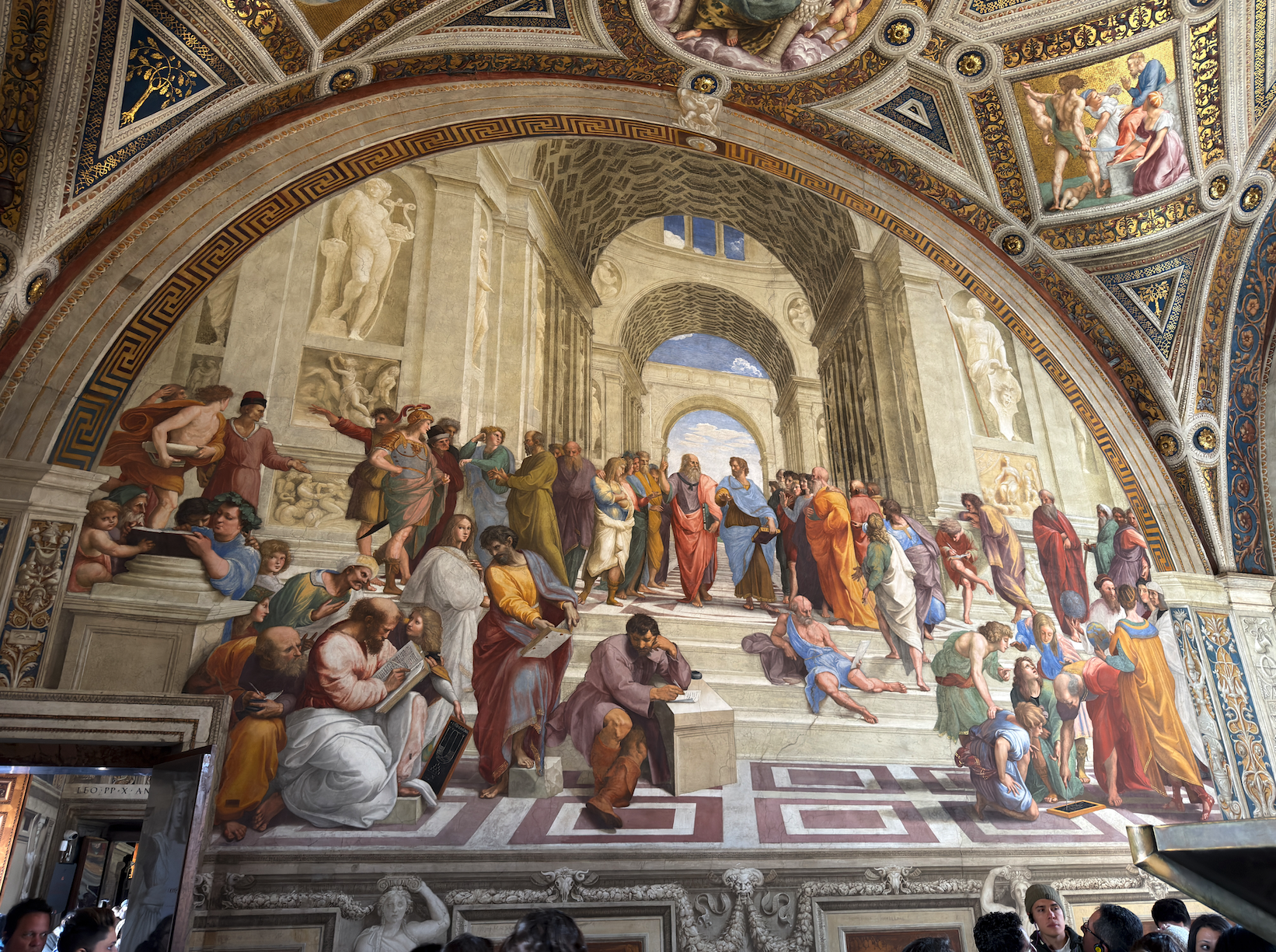
The School of Athens by Raphael in The Vatican Museum
Day 3: The Historic Centre at a Slower Pace
Our final day focused on Rome’s central landmarks.
We began with a dedicated visit to the Pantheon. Arriving shortly after opening keeps the experience calm and allows you to properly appreciate the scale of the dome and the light falling through the oculus. It is now ticketed, so booking in advance can save time during busy periods. From there, Piazza Navona offers fountains, open space and an easy strolling route towards Campo de’ Fiori.
For lunch, we chose Lauro Bistrot, tucked just off the famous Via dei Coronari. It turned out to be one of the most enjoyable meals of the trip — not only for the food, but for the experience. We had a lovely chat with the owner, who runs the bistro alongside his mother, which added a genuine, local feel you simply do not get in more commercial spots.
Via dei Coronari itself is worth seeking out. Lined with independent, Italian‑owned shops rather than global brands you can find anywhere in the world, it feels authentic and refreshingly traditional. It is an ideal street for a slower wander before continuing your afternoon.
Later, we made our way up to Janiculum Hill. If you want one of the best views in Rome without large crowds, this is the place. It’s particularly effective as a reflective final stop before departure.
Finally, our last dinner in Rome was at a wonderfully intimate osteria, recommended by Claudia at The Hoxton Rome and conveniently located just around the corner — sparing our feet any more mileage. Once again, delicious Roman dishes were served by the genial host, Valerio (his brother is the chef), and washed down with a lovely dry carafe of Italian wine. It was the perfect way to end the trip: relaxed, local and unmistakably Italian.
Where to Stay in Rome
For this trip, we stayed at The Hoxton, Rome — and would highly recommend it.
Located slightly outside the most overcrowded tourist areas, it offered a calmer, more residential feel while still being well connected to the historic centre. After full sightseeing days, returning to a neighbourhood that felt local rather than chaotic made a noticeable difference to the overall experience.
The staff were exceptional throughout our stay — warm, efficient and all fluent in English, which many UK travellers find reassuring. Service levels were consistently high without ever feeling formal.
We also recommend booking breakfast as part of your stay. Having a relaxed, well-prepared breakfast each morning is one of the simplest ways to fuel long walking days in Rome. It removes decision fatigue and allows you to head straight out to explore.
In general, location is everything in Rome. Whether you choose the historic centre, Trastevere, Prati or a slightly more local district like this, proximity and atmosphere matter more than star rating. Being able to move easily between neighbourhoods — and retreat from them when needed — is invaluable.
Where We Ate: Standout Restaurants
Our first night in Rome — straight after landing — was spent at Casa Mia. A simple, well-made pizza and a cold Peroni set the tone perfectly. Nothing complicated, just good ingredients and an easy atmosphere. It is exactly what you want after an evening arrival.
After our day exploring Historic Rome, we dined at Il Simeto, which proved to be one of the strongest meals of the trip. We started with artichoke, followed by a perfectly executed carbonara, paired with a crisp Italian white wine. Traditional Roman cooking, generous portions and warm service made it a standout choice. It felt authentic without being tourist-driven — the kind of restaurant you are pleased you booked in advance.
Lauro Bistrot, just off Via dei Coronari, delivered one of the most personal dining experiences of the trip. Beyond the quality of the food, the conversation with the owner — who runs the bistro alongside his mother — made it memorable. It is exactly the sort of independent, family-run spot we encourage clients to seek out.
On our final evening, we chose Osteria Del Rione for dinner. It provided a fitting close to the trip: classic Roman dishes, a relaxed atmosphere and the reassuring feeling that you are eating somewhere locals genuinely return to. Ending the holiday with a strong neighbourhood osteria felt entirely right.
Across the trip, we focused on classic Roman dishes such as cacio e pepe, carbonara and amatriciana, along with neighbourhood restaurants rather than heavily promoted tourist spots.
Key advice: avoid restaurants with aggressive street promotion or laminated photo menus. Seek smaller menus focused on Roman specialities and book ahead where possible.
Practical Rome Travel Tips
Book Colosseum and Vatican tickets in advance.
Wear proper walking shoes; Rome’s cobbles are unforgiving.
Plan one major area per half day to avoid exhaustion.
Pre‑arrange airport transfers, particularly for early departures.
Build in time for long lunches and unplanned detours.
Rome rewards structure but also benefits from breathing space.
Planning Your Rome Holiday with One Extra Night Travel
A well‑designed Rome city break is about timing, positioning and reservations.
At One Extra Night Travel, we handle hotel selection, timed-entry tickets, restaurant reservations and airport transfers, ensuring your itinerary flows logically rather than reactively. The goal is not simply to see Rome, but to experience it without friction.
If you’re considering a Rome holiday from the UK — whether for a birthday, anniversary or long weekend — we can create an itinerary that balances culture, food and pace in a way that suits you.
Rome does not need to be rushed. It simply needs to be planned properly.
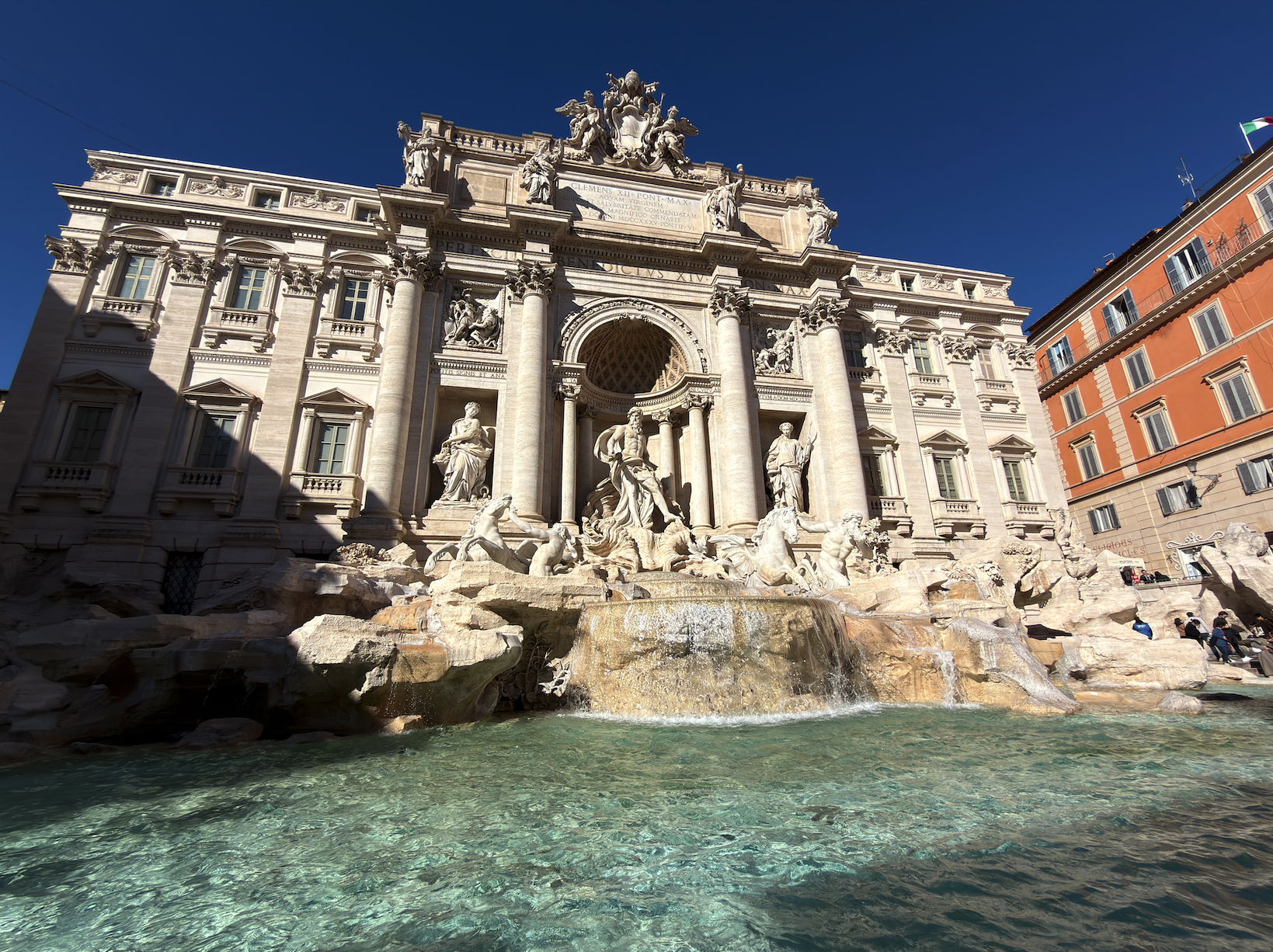
The Trevi Fountain in February 2026